
-
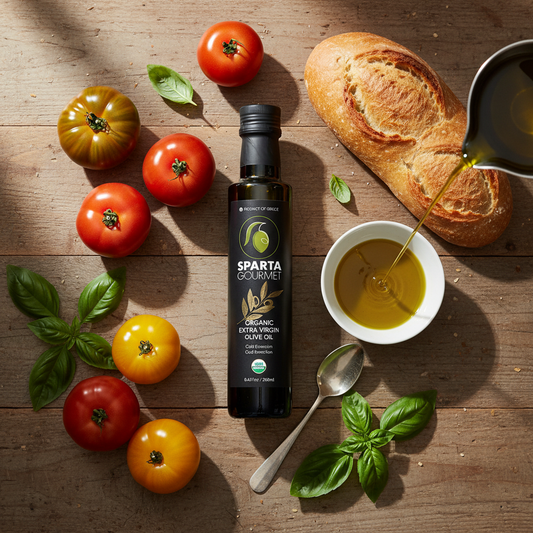
Sparta Gourmet Organic Koroneiki EVOO 250ml — Cold-Pressed Greek Olive Oil, USDA Organic, Laconia
Regular price $12.00 USDRegular priceUnit price $12.00 each -
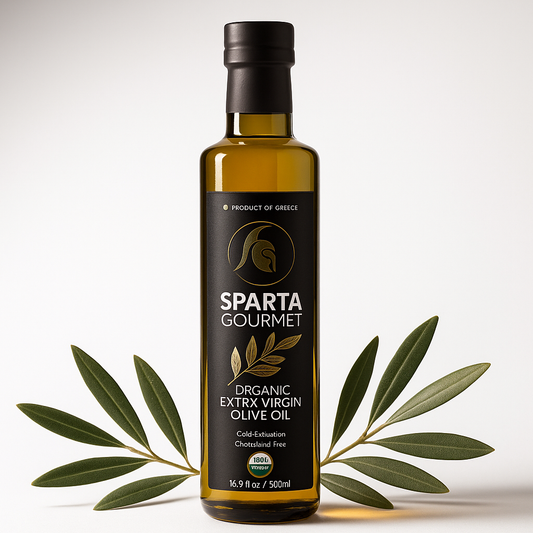
Sparta Gourmet Organic Koroneiki EVOO 500ml — Cold-Pressed, USDA Organic, High-Polyphenol Greek Olive Oil, Laconia
Regular price From $15.00 USDRegular priceSparta Gourmet Organic Koroneiki EVOO 500ml — Cold-Pressed, USDA Organic, High-Polyphenol Greek Olive Oil, Laconia
Regular price From $15.00 USDRegular priceSparta Gourmet Organic Koroneiki EVOO 500ml — Cold-Pressed, USDA Organic, High-Polyphenol Greek Olive Oil, Laconia
Regular price From $15.00 USDRegular price -
Sparta Gourmet Premiere Koroneiki EVOO — 522 mg/kg High-Polyphenol Greek Olive Oil, Single-Estate Laconia, 500ml
Regular price From $22.00 USDRegular priceSparta Gourmet Premiere Koroneiki EVOO — 522 mg/kg High-Polyphenol Greek Olive Oil, Single-Estate Laconia, 500ml
Regular price From $22.00 USDRegular priceSparta Gourmet Premiere Koroneiki EVOO — 522 mg/kg High-Polyphenol Greek Olive Oil, Single-Estate Laconia, 500ml
Regular price From $22.00 USDRegular price -
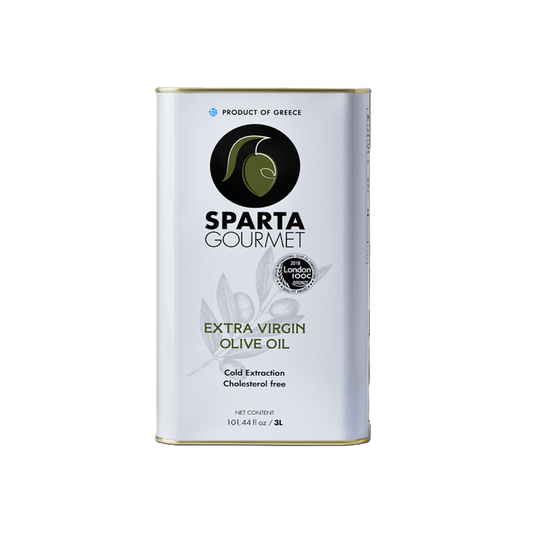
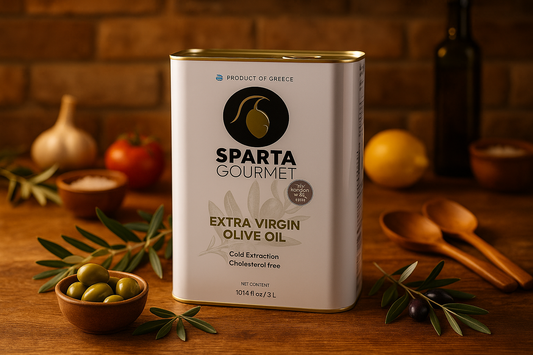
Sparta Gourmet Koroneiki EVOO 3L Tin — Cold-Pressed Greek Olive Oil, Laconia (Peloponnese)
Regular price From $44.90 USDRegular price$52.00 USDSale price From $44.90 USDSparta Gourmet Koroneiki EVOO 3L Tin — Cold-Pressed Greek Olive Oil, Laconia (Peloponnese)
Regular price From $44.90 USDRegular price$52.00 USDSale price From $44.90 USDSparta Gourmet Koroneiki EVOO 3L Tin — Cold-Pressed Greek Olive Oil, Laconia (Peloponnese)
Regular price From $44.90 USDRegular price$52.00 USDSale price From $44.90 USDSale




Frequently Asked Questions
What's the difference between Greek and Italian olive oil?
Greece produces over 80% of its olive oil at extra virgin grade — the highest in the world — primarily from the high-polyphenol Koroneiki variety. Italian oils vary widely by region and variety, and many bottles labeled 'Italian' are blended from olives grown in Tunisia, Spain, or Greece and bottled in Italy. Greek single-estate oils from regions like Laconia and Messinia consistently deliver higher polyphenol counts and better traceability.
What is high-polyphenol olive oil?
High-polyphenol olive oil contains 250 mg/kg or more of total polyphenols — the EU threshold for a protected health claim. Premium therapeutic-grade oils range from 400 to 800+ mg/kg. Polyphenols are the antioxidants responsible for EVOO's anti-inflammatory, cardiovascular, and cognitive health benefits, and they produce the characteristic peppery throat sting of a quality oil.
Which Greek olive oil is best for the Mediterranean diet?
Early-harvest Koroneiki EVOO from the Peloponnese — such as Sparta Gourmet from Laconia — is ideal. It delivers the highest polyphenol concentration, robust flavor, and the anti-inflammatory Oleocanthal content that makes Mediterranean diet research so compelling. Use it raw as a finishing oil for maximum benefit.
How do I read an olive oil harvest date?
The harvest date tells you when the olives were pressed into oil. Olive oil is best consumed within 18 months of harvest for peak polyphenols and flavor. If a bottle shows only a 'best by' date with no harvest date, that is a red flag — you have no way to know how old the oil actually is.
What does PDO and PGI mean on a Greek olive oil label?
PDO (Protected Designation of Origin) guarantees the oil was produced, processed, and packaged in a specific geographic region using traditional methods — the strictest EU quality designation. PGI (Protected Geographical Indication) requires at least one stage of production in the named region. Both certifications are independently verified and protect against mislabeling and adulteration.