Collection: Greek Olive Wood Kitchenware
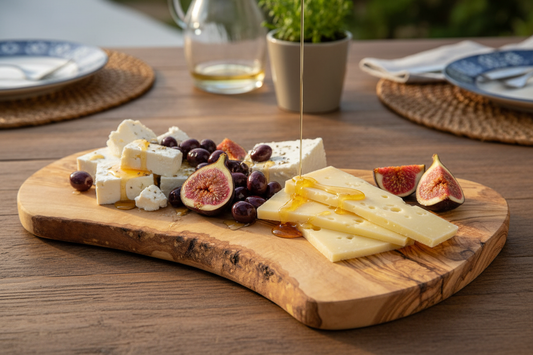
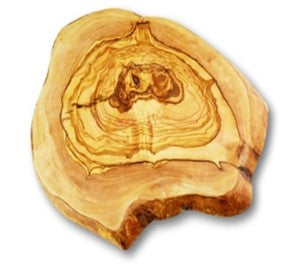
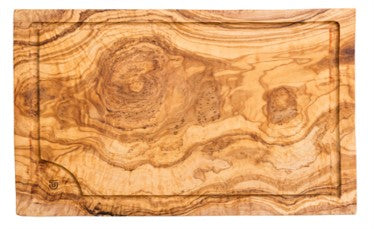
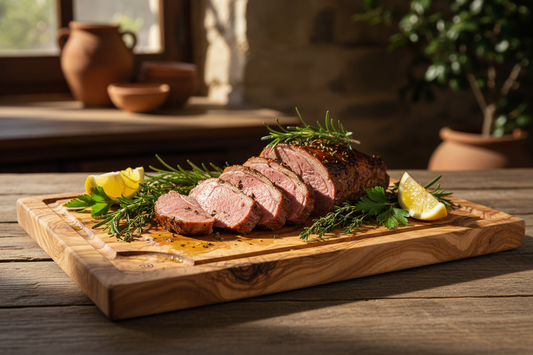
Hand-carved kitchenware from Greek olive wood — serving boards, bowls, salad servers, and mortar & pestle sets shaped from trees that gave decades of harvests before giving their timber. Each piece is cut from a single block, so the grain you hold is unrepeatable: no two boards, bowls, or honey dippers are alike. Olive wood is dense, naturally antibacterial, and ages beautifully with a wipe of olive oil — the same oil it spent its working life producing. Pair a serving board with Roussas barrel-aged PDO feta and real Kalamata olives, or set the honey pot beside Greek mountain honey, and the table tells the whole story of the Greek pantry.
Why Olive Wood
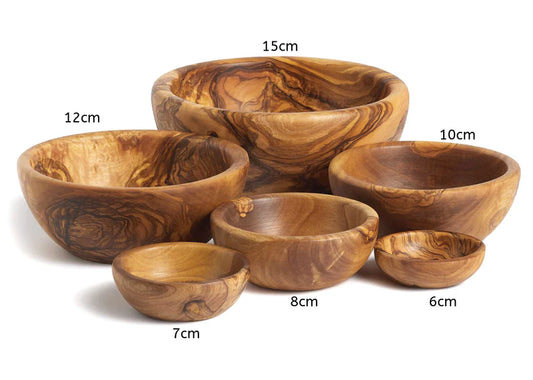
Olive wood has a Janka hardness of roughly 2,700 lbf — harder than hard maple or oak — which is why it resists knife scoring and doesn't absorb odours the way softer woods do. Its density is also why it can be turned thin without splitting: the nesting bowls and shell dishes here would crack in most other timbers.
Care
- Hand wash in warm water, never the dishwasher — heat and prolonged soaking will split the grain
- Dry immediately and stand upright rather than flat
- Wipe with olive oil every few weeks; the wood absorbs it and the grain deepens in colour
- Never soak, and keep out of direct sunlight and away from radiators
Frequently Asked Questions
- Is olive wood safe for food? Yes. Olive wood is dense and closed-grain, which means it absorbs very little moisture and is naturally resistant to bacteria. It is used unfinished and unsealed — no varnish or lacquer.
- Can olive wood go in the dishwasher? No. Dishwasher heat and prolonged water exposure will split the grain. Hand wash in warm water, dry immediately, and stand upright.
- Why does every olive wood board look different? Each piece is cut from a single block of wood rather than glued from strips, so the grain pattern is determined by the individual tree. No two pieces are identical.
- How do I care for an olive wood board? Wipe it with olive oil every few weeks. The wood absorbs the oil, the grain darkens, and the surface stays sealed against moisture.
- Are olive trees cut down to make this? Olive wood kitchenware is made from the timber of trees at the end of their productive fruiting life, after decades of harvests, rather than from trees felled for timber.

-
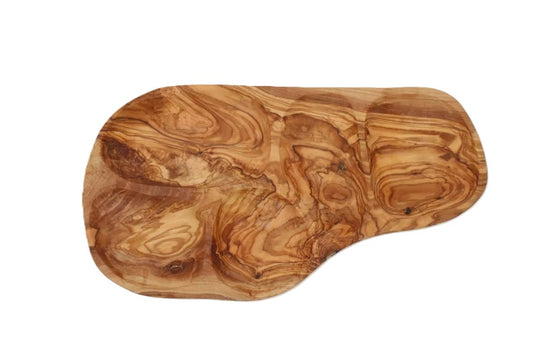
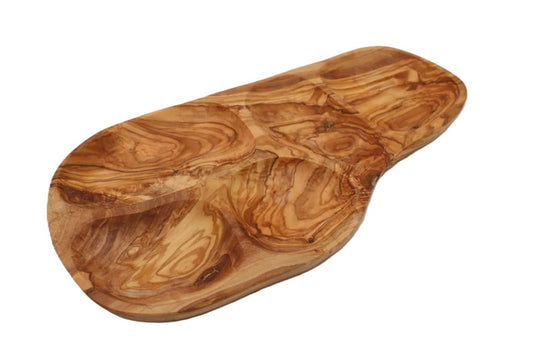
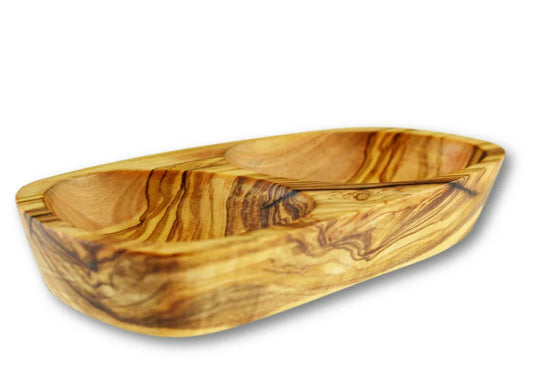
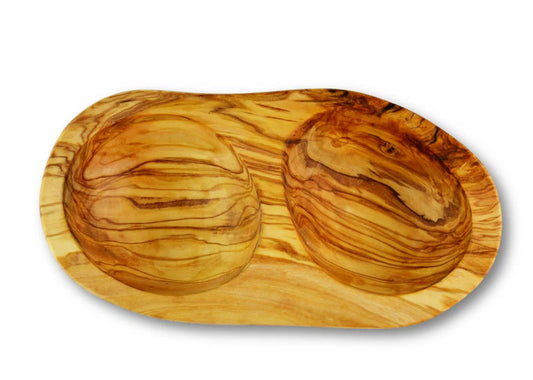
Serving plate with 1 to 6 compartments made of olive wood, cheese plate, dips plate, nut plate, handmade
Regular price From $40.00 USDRegular priceServing plate with 1 to 6 compartments made of olive wood, cheese plate, dips plate, nut plate, handmade
Regular price From $40.00 USDRegular priceServing plate with 1 to 6 compartments made of olive wood, cheese plate, dips plate, nut plate, handmade
Regular price From $40.00 USDRegular price -
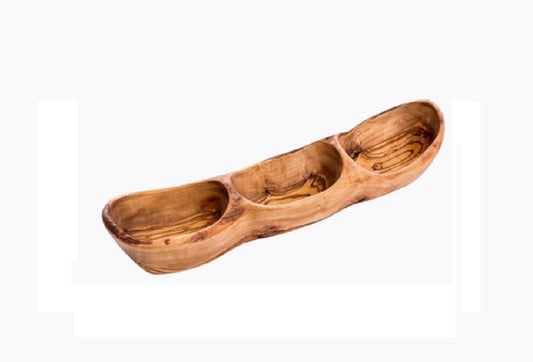
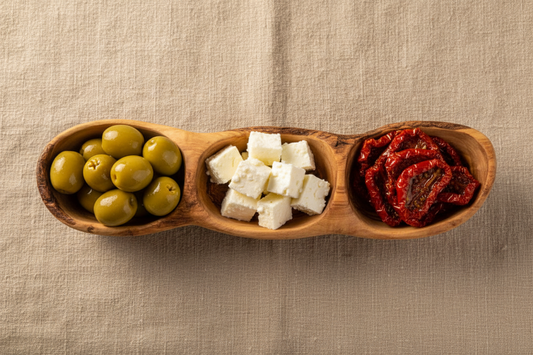
Olive Wood Three-Section Serving Bowl — Handcrafted Greek Olivewood, Rustic Finish
Regular price $45.00 USDRegular price -
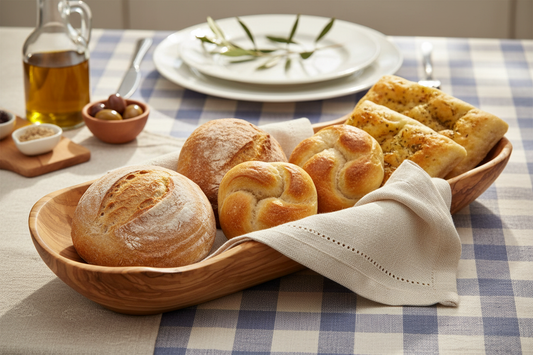
Olive Wood Bread Basket
Regular price $39.00 USDRegular price -
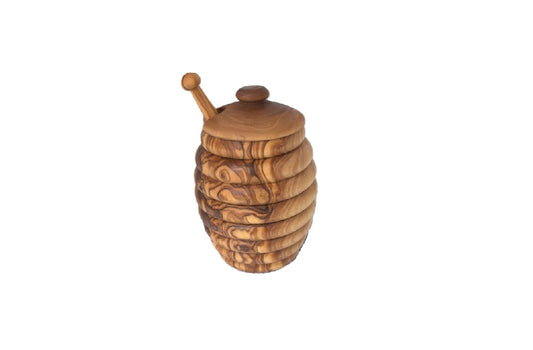
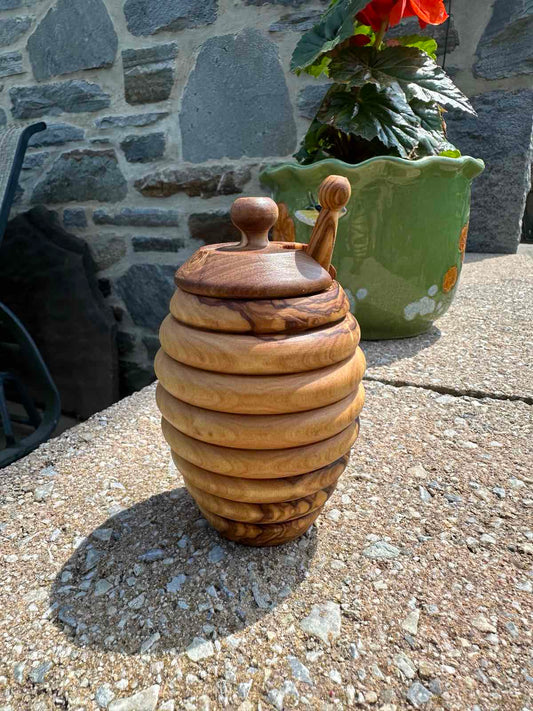
Olive Wood Honey Pot with Dipper
Regular price $40.00 USDRegular price -
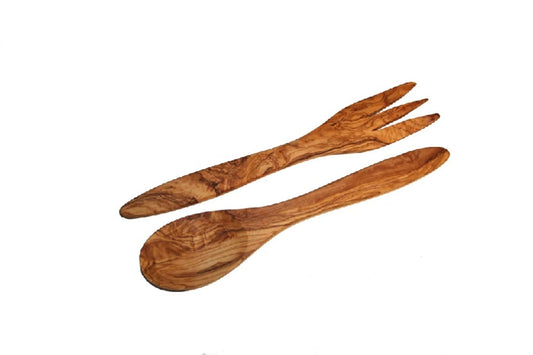
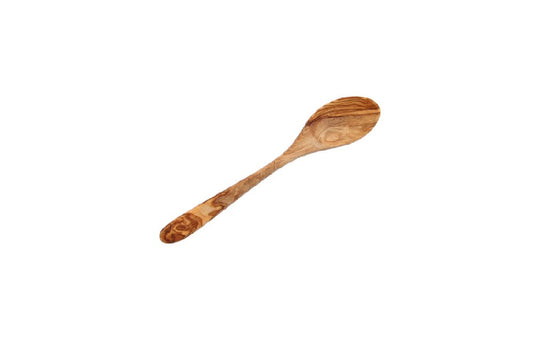
Olive Wood Salad Server Set — Handcrafted Greek Olivewood Serving Utensils
Regular price From $12.00 USDRegular priceOlive Wood Salad Server Set — Handcrafted Greek Olivewood Serving Utensils
Regular price From $12.00 USDRegular priceOlive Wood Salad Server Set — Handcrafted Greek Olivewood Serving Utensils
Regular price From $12.00 USDRegular price -
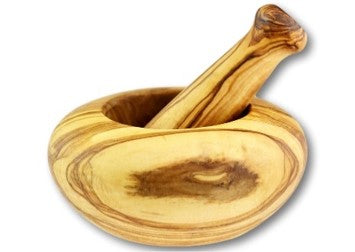
Olive Wood Pestle & Mortar — Curved Edge | Handcrafted Greek Olivewood
Regular price From $24.00 USDRegular priceOlive Wood Pestle & Mortar — Curved Edge | Handcrafted Greek Olivewood
Regular price From $24.00 USDRegular priceOlive Wood Pestle & Mortar — Curved Edge | Handcrafted Greek Olivewood
Regular price From $24.00 USDRegular price -
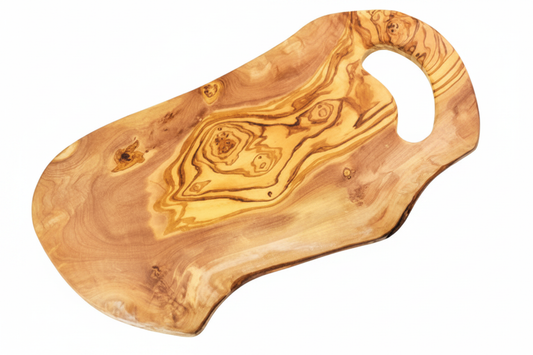
Olive Wood Rustic Serving Board — Live Edge, 58x28cm | Handcrafted Greek Olivewood
Regular price $80.00 USDRegular price -
Olive Wood Rustic Oval Serving Board — Live Edge, 45x22cm | Handcrafted Greek Olivewood
Regular price $75.00 USDRegular price -
Olive Wood Rustic Round Serving Board — Live Edge, 30cm | Handcrafted Greek Olivewood
Regular price $60.00 USDRegular price -
Olive Wood Cutting Board with Juice Groove — Smooth Finish, 40x15cm | Greek Olivewood
Regular price $60.00 USDRegular price -
Olive Wood Nesting Serving Bowls, Set of 6 — Handcrafted Greek Olivewood
Regular price $85.00 USDRegular price -
Olive Wood Appetizer Dish — 2 to 6 Sections | Handcrafted Greek Olivewood
Regular price From $30.00 USDRegular priceOlive Wood Appetizer Dish — 2 to 6 Sections | Handcrafted Greek Olivewood
Regular price From $30.00 USDRegular priceOlive Wood Appetizer Dish — 2 to 6 Sections | Handcrafted Greek Olivewood
Regular price From $30.00 USDRegular price -
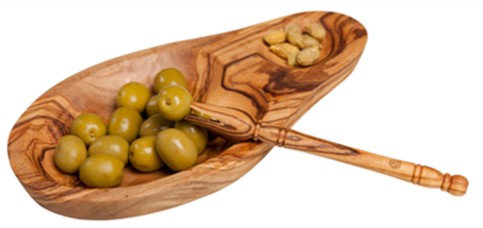
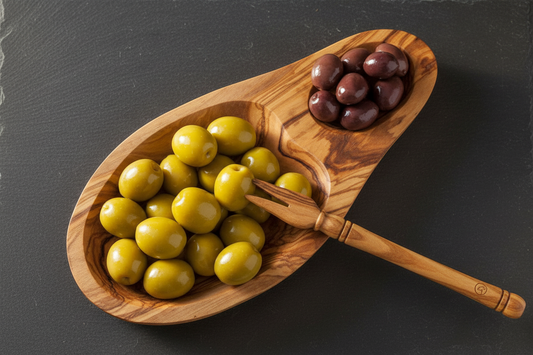
Olive Set of 2 - (2 sections Serving Dish + Olive Pick)
Regular price $33.00 USDRegular price -
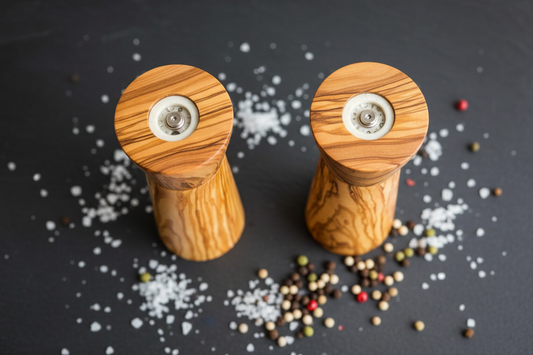
Olive Wood Salt & Pepper Grinder — Ceramic Mechanism | Handcrafted Greek Olivewood
Regular price $69.00 USDRegular price -
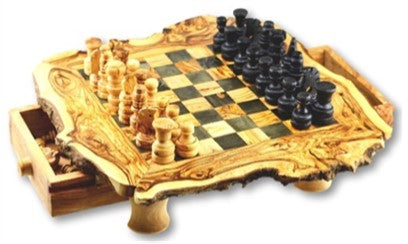
Medium Chess Set (Board comes with legs & drawers) 38x38cm
Regular price $140.00 USDRegular price