
-
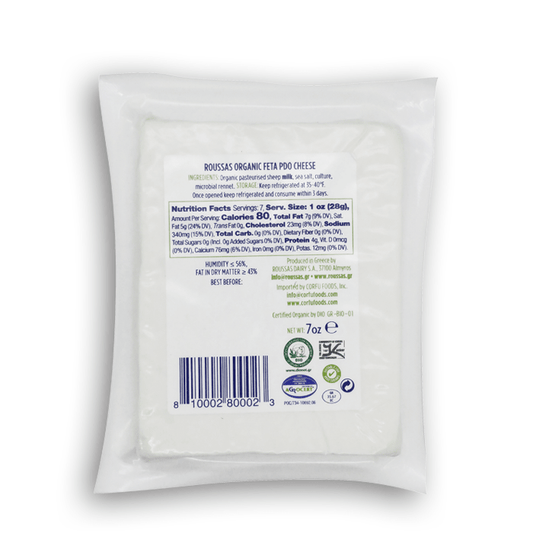
Roussas Organic Feta Cheese PDO 200g (7oz)
Regular price $16.99 USDRegular price -
Roussas Greek PDO Feta Cheese — Barrel-Aged Sheep & Goat Milk Feta | 7 oz Block
Regular price From $14.49 USDRegular priceRoussas Greek PDO Feta Cheese — Barrel-Aged Sheep & Goat Milk Feta | 7 oz Block
Regular price From $14.49 USDRegular priceRoussas Greek PDO Feta Cheese — Barrel-Aged Sheep & Goat Milk Feta | 7 oz Block
Regular price From $14.49 USDRegular price -
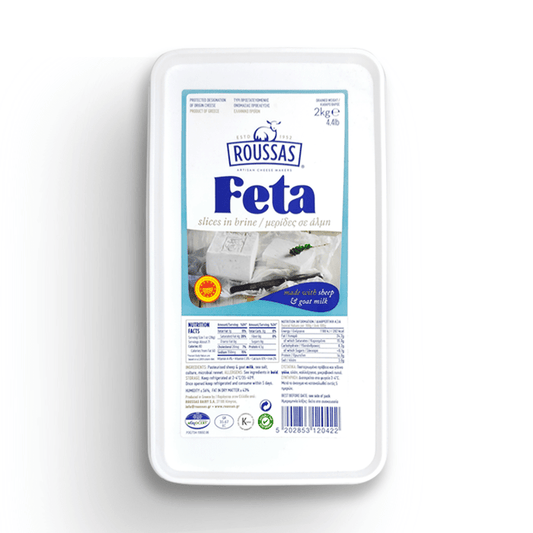
Roussas Greek PDO Feta Cheese — Barrel-Aged Sheep & Goat Milk Feta | 2.2 lb Block
Regular price $34.00 USDRegular price -
Roussas Greek PDO Feta Cheese — Barrel-Aged Sheep & Goat Milk Feta | 4.4 lb Bulk Block
Regular price $62.99 USDRegular price -
Roussas Graviera — Aged Greek Hard Cheese, 100% Sheep's Milk | For Saganaki, Grating & Cheese Boards | 7 oz
Regular price From $12.99 USDRegular priceRoussas Graviera — Aged Greek Hard Cheese, 100% Sheep's Milk | For Saganaki, Grating & Cheese Boards | 7 oz
Regular price From $12.99 USDRegular priceRoussas Graviera — Aged Greek Hard Cheese, 100% Sheep's Milk | For Saganaki, Grating & Cheese Boards | 7 oz
Regular price From $12.99 USDRegular price






Frequently Asked Questions
What makes feta cheese authentic?
Authentic feta carries PDO (Protected Designation of Origin) certification, guaranteeing it was made in specific regions of Greece — primarily Macedonia, Thrace, Epirus, Thessaly, Central Greece, the Peloponnese, and Lesbos — using a traditional blend of sheep's milk (minimum 70%) and goat's milk (maximum 30%). No cow's milk, fillers, or additives are permitted. Any cheese labeled 'feta' made outside Greece is not legally authentic feta under EU law.
Is all feta cheese from Greece?
Under EU law, only cheese produced in designated Greek regions can be called feta. However, in the US and other non-EU markets, domestic producers can legally label their product 'feta' even if it contains cow's milk and bears no resemblance to the original. Always look for the PDO seal and 'Product of Greece' to ensure authenticity.
What is the difference between sheep milk, goat milk, and cow milk feta?
Authentic PDO feta uses sheep's milk (minimum 70%) blended with goat's milk (up to 30%), producing a rich, tangy, creamy cheese with complex flavor. Cow's milk feta — common in non-Greek commercial versions — is milder, less complex, and lacks the characteristic tang. The sheep-goat blend is what gives authentic Greek feta its distinctive crumble and brine-forward flavor.
How long does feta last in the fridge?
Feta kept submerged in its brine and refrigerated at 35–40°F stays fresh for several weeks after opening. If the brine level drops, top it up with a light saltwater solution (1 teaspoon of salt per cup of water). Feta stored without brine dries out quickly and should be used within a few days.
What's the best feta for a Greek salad?
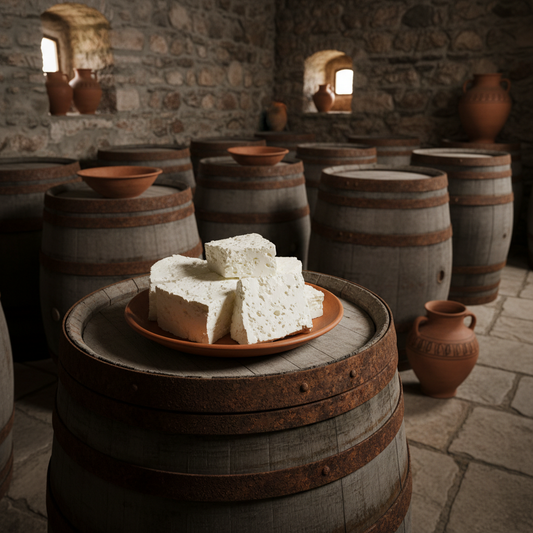
For a classic Greek salad (horiatiki), use barrel-aged PDO feta in block form — not crumbled. Barrel-aged feta has a firmer texture, richer flavor, and holds its shape when sliced. Roussas barrel-aged feta from Thessaly is an excellent choice: creamy, tangy, and made to traditional specifications with sheep and goat milk.